Phone Island

Software engineering · Cloud architecture · Integration

Systems
that keep
running.

Phone Island GmbH designs, builds and maintains software for organisations whose operations depend on it. We work in small engineering teams, in English, close to the systems we are responsible for.

Rows of dark server cabinets in a data centre corridor marked by a single continuous red light line
02The company

An engineering company, not a project office.

Phone Island GmbH is a software company working across custom development, cloud architecture and systems integration. Our work is defined less by a single product than by a way of working: read the existing system carefully, describe the problem precisely, then change as little as necessary to solve it.

We take responsibility for the parts of a system we build. That means the deployment pipeline, the monitoring, the data migrations and the documentation are treated as part of the delivery, not as an afterthought handled once the feature is finished.

Engagements are structured so that the client always owns the result: the source code, the infrastructure definitions and the operational knowledge required to run the system without us.

03Core services

What we build

Six areas cover most of our work. They are rarely used in isolation — a data platform needs integration work, a mobile release needs a backend that can be deployed safely. The full breakdown is on the services page.

  1. 01

    Custom software development

    Applications built around a specific operational process rather than adapted from a generic product.

  2. 02

    Web application development

    Browser-based systems with server-rendered performance, accessible interfaces and predictable release cycles.

  3. 03

    Cloud architecture & migration

    Environments defined as code, sized for real load, with a clear route from the current setup to the target one.

  4. 04

    Integration & APIs

    Interfaces between systems that never assumed the other side would exist, with contracts and error handling written down.

  5. 05

    Data platforms & automation

    Pipelines that move data reliably, and automation that removes manual steps without hiding them.

  6. 06

    Modernisation & quality assurance

    Incremental replacement of ageing components, supported by tests that make each step safe to release.

04Technology expertise

Chosen for the problem, not the trend.

We keep our stack deliberately narrow so that every engineer can review every part of it. New tools enter that stack only when there is a system that genuinely needs them.

Application
TypeScript, JavaScript, Python, Java, .NET
Interfaces
React, server-side rendering, design systems, accessibility
Mobile
Native platform SDKs and cross-platform frameworks
Data
PostgreSQL, MySQL, document stores, analytical warehouses
Delivery
Containers, infrastructure as code, CI/CD, observability
Integration
REST, GraphQL, message queues, event streams, batch transfer
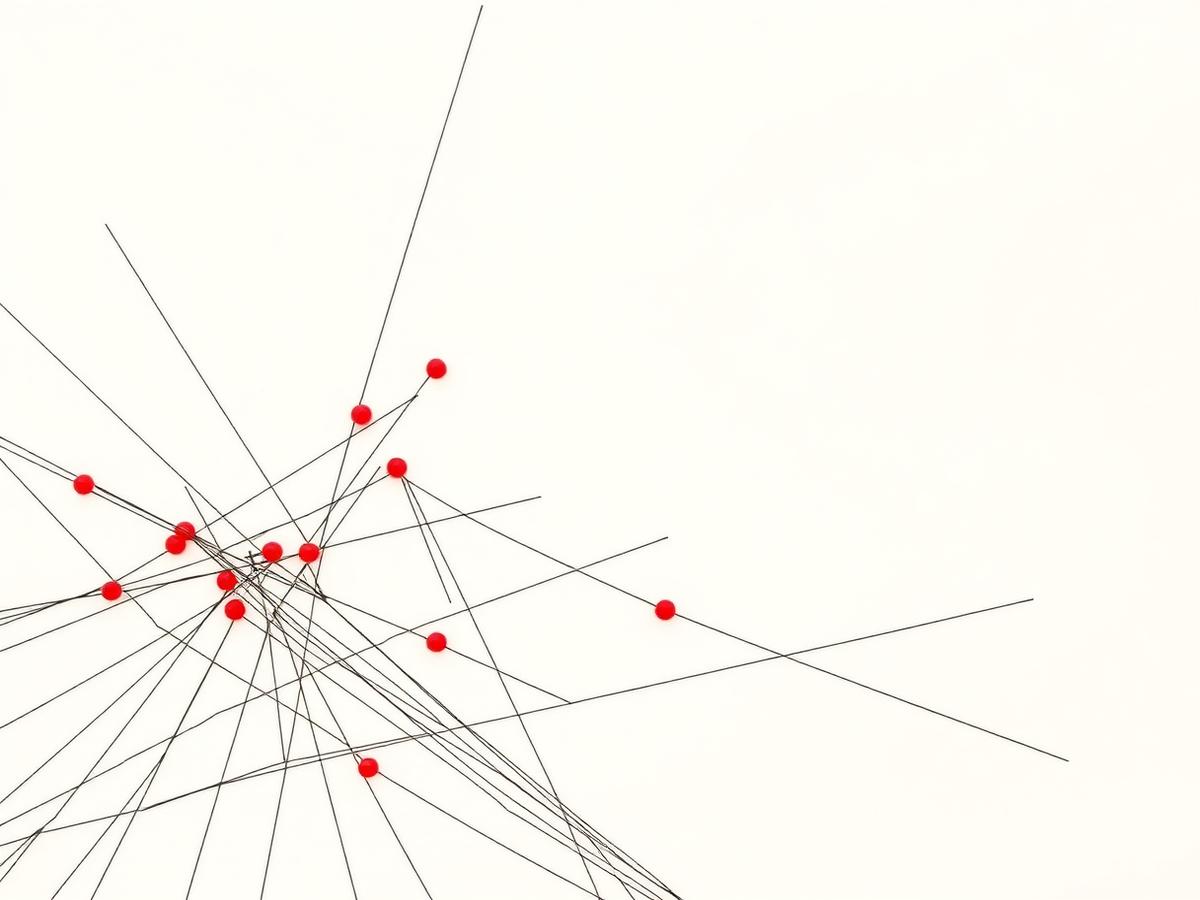
Abstract technical diagram of thin intersecting black lines connecting small red nodes
Fig. 04 — Dependency mapping precedes implementation.
05Industries served

Sectors where downtime is expensive.

The technical constraints differ by sector, but the requirement is the same: systems must behave predictably under load, and changes must be reversible.

Telecommunications

Provisioning flows, subscriber data, billing interfaces and device management.

Logistics & mobility

Dispatch, tracking, route data and integrations with carrier and warehouse systems.

Retail & commerce

Catalogue and order systems, stock synchronisation and payment integrations.

Financial services

Reconciliation, reporting pipelines and controlled access to sensitive records.

Manufacturing

Production data collection, machine interfaces and operational dashboards.

Healthcare technology

Structured clinical and administrative data with strict privacy requirements.

Professional services

Internal tooling, document workflows and client-facing portals.

Public sector suppliers

Accessible interfaces, auditable processes and long support horizons.

06Working process

Six steps, in this order.

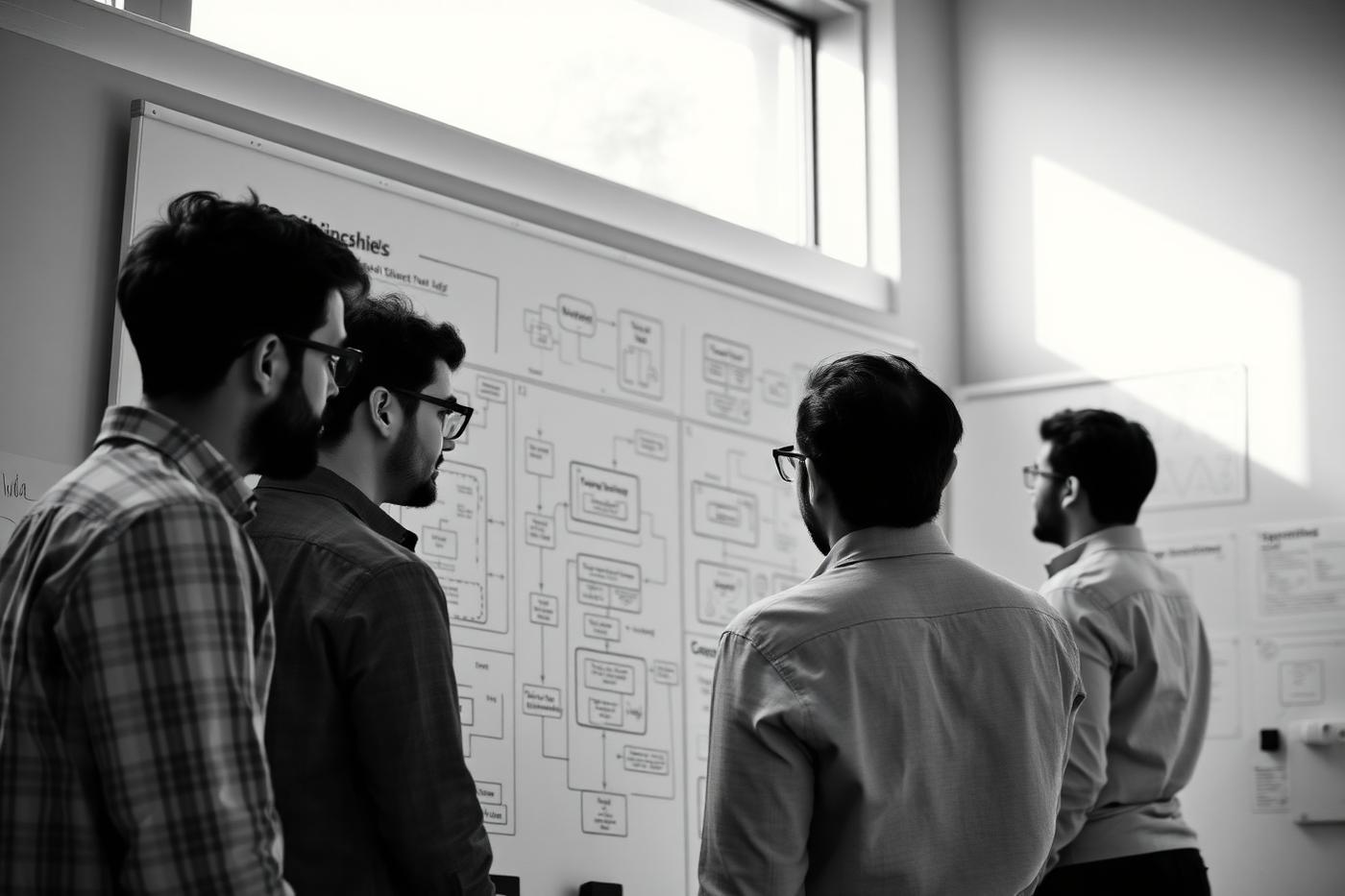
Four software engineers reviewing a system diagram drawn on a whiteboard in daylight
  1. ST/01

    Discovery

    We read the systems, the data and the constraints, and write down what the problem actually is.

  2. ST/02

    Architecture

    A written technical plan: components, interfaces, data flow, failure modes and the order of work.

  3. ST/03

    Increment

    Short delivery cycles, each one ending in something that runs in an environment you can inspect.

  4. ST/04

    Verification

    Automated tests, review and manual checks against the acceptance criteria agreed in advance.

  5. ST/05

    Release

    Deployment through a repeatable pipeline, with a rollback path prepared before the change goes out.

  6. ST/06

    Operation

    Monitoring, documentation handover and a defined route for reporting and fixing issues.

07Business benefits

What changes when the software is built properly.

Fewer interruptions

Repeatable deployments, monitored services and reversible changes reduce the number of incidents that reach your users at all.

Lower cost of change

Tested, documented code means the second and third change to a system are not more expensive than the first.

Clearer ownership

You keep the repository, the infrastructure definitions and the runbooks, so the system is never dependent on one supplier.

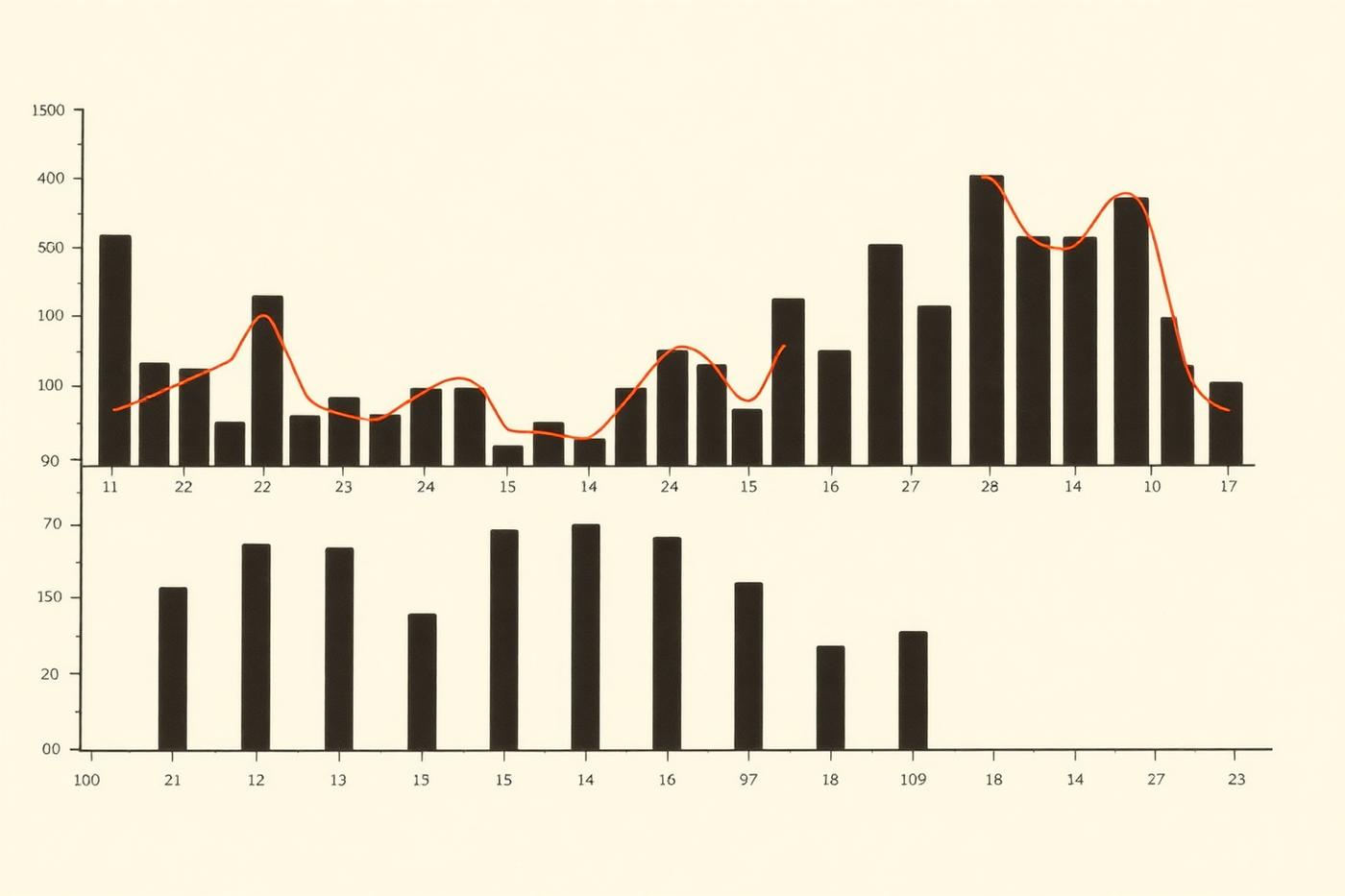
Minimal printed chart of black bars with a thin red trend line on off-white paper
Fig. 07

Measurement comes before optimisation. Before we change how a system performs, we agree on what is being measured, how it is recorded and what an acceptable result looks like. Without that, performance work is guesswork.

08Security and quality
Isometric black wireframe lattice with a single red node, representing controlled access within a system
Fig. 08 — Least privilege by default.

Security is part of the build.

Access

Permissions are granted per role and per environment. Production access is limited to the engineers who need it, and credentials never live in source control.

Data

Personal data is only collected where a feature requires it, encrypted in transit, and separated from analytical copies wherever that is possible.

Review

Every change is reviewed by a second engineer. Dependencies are tracked and updated, and security-relevant updates are prioritised.

Testing

Automated tests cover the logic that matters most: money, permissions, and anything that writes to a database.

Recovery

Backups are verified by restoring them. A change that cannot be rolled back is redesigned until it can be.

09Example solution scenarios

Illustrative scenarios, not client reports.

The situations below describe the kind of work we are asked to do. They are written as examples of our capabilities and do not describe named clients, results or engagements.

SC/01

A monolith that can no longer be released weekly

The application works, but every release requires a full regression cycle. We map the modules, extract the highest-risk area behind a stable interface, add tests around it, and move it to its own deployment unit so the remainder can be released independently.

SC/02

Two systems exchanging data through spreadsheets

Orders leave one system as an export and enter another as a manual import. We define the data contract, build an integration service with validation and retry behaviour, and add a reconciliation report so mismatches surface immediately instead of at month end.

SC/03

Reporting that takes a day to produce

Figures are assembled by hand from several sources. We build a pipeline that loads each source on a schedule, records where every number came from, and exposes the result to reporting tools that operations staff can use themselves.

SC/04

An infrastructure setup nobody can reproduce

Servers were configured by hand over several years. We describe the target environment as code, rebuild it from that definition, migrate workloads in stages, and leave a setup that can be recreated from the repository.

10 — Company principles

We would rather explain a constraint than promise around it.

Precision

A vague requirement produces a vague system. We write things down.

Restraint

The smallest solution that holds under real conditions is the right one.

Transparency

Progress, risks and mistakes are reported as they happen.

Continuity

We build systems that outlast the engagement that produced them.

Concrete modular building facade photographed as a repeating geometric grid
11Frequently asked questions

Questions we are asked first.

What kind of engagements does Phone Island GmbH take on?

We work on custom software development, web and mobile applications, cloud architecture, systems integration, data platforms and the modernisation of existing software. Engagements range from a focused technical review to the long-term development of a product with a dedicated engineering team.

How does an engagement usually start?

It starts with a written description of the problem sent by email. We reply with clarifying questions, then propose a short discovery step in which we map the current systems, constraints and priorities before any code is written.

Do you work with existing codebases?

Yes. A large part of our work involves systems that are already in production. We begin by reading the code, the data model and the deployment setup, then agree on a sequence of changes that can be released without interrupting daily operations.

Which technologies do you work with?

We work primarily with TypeScript, JavaScript, Python, Java and .NET on the application side, relational and document databases on the data side, and container-based deployments on the major cloud platforms. Technology choices follow the requirements of the system, not the other way around.

How do you handle confidentiality and data protection?

Access is limited to the engineers working on an engagement, credentials are never stored in source code, and personal data is only processed where it is necessary. Our handling of data collected through our own applications is described in our Privacy Policy.

In which language do you communicate?

All documentation, code comments, meetings and correspondence are in English.
12Contact information

Write to us in English.

A short description of the system, the problem and the timeframe is enough to start. We reply with questions rather than a template. Full details are on the contacts page.

Phone Island GmbH

geraldinewright140@gmail.com

phoneislandgroup.com

Close-up of bundled fibre optic cables in greyscale with one strand lit in red
Fig. 12 — One connection at a time.